Evaluating the Helping Little Minds Grow Teacher Student Design for Educational Branding
In the competitive landscape of educational merchandise and teacher appreciation gifts, visual identity plays a crucial role in conveying values and fostering engagement. Among the various options available to educators, designers, and parents, the Helping Little Minds Grow Teacher Student Design has emerged as a notable option for those seeking to celebrate the academic journey. This design combines traditional educational iconography with a soft, artistic aesthetic, aiming to resonate with both children and adults who value learning.
This article provides an objective evaluation of this specific design asset. It explores its visual components, potential use cases, technical specifications, and the practical considerations involved in integrating it into personal or commercial projects. By understanding the strengths and limitations of this design, readers can make informed decisions about whether it aligns with their specific branding or gifting goals.
Visual Composition and Aesthetic Appeal
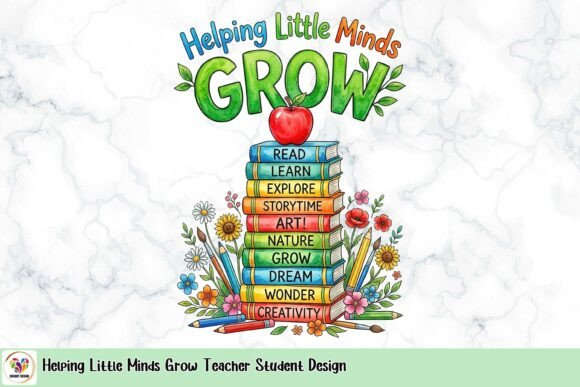
The core appeal of the Helping Little Minds Grow Teacher Student Design lies in its deliberate combination of vibrant imagery and motivational typography. The central motif features a colorful stack of books, serving as a foundational symbol of knowledge and education. Surrounding this stack are key inspirational words: READ, LEARN, EXPLORE, and CREATIVITY. These terms are not merely decorative; they act as direct calls to action that reinforce positive academic behaviors.
The artistic style is characterized by a watercolor effect. Unlike flat vector graphics which can sometimes appear rigid or corporate, the watercolor texture introduces organic edges and blended hues. This creates a playful, approachable, and engaging visual tone. The palette is bright and cheerful, utilizing colors that are typically associated with childhood energy and creativity. This choice of style makes the design particularly suitable for environments aimed at younger students, where visual warmth can reduce anxiety and encourage participation.
Furthermore, the inclusion of supplementary elements such as flowers, pencils, and an apple adds layers of context. The apple is a universal symbol of teaching and gratitude, while the flowers suggest growth and nurturing. Together, these elements create a cohesive narrative that embodies a love for learning. For individuals looking to express appreciation for teachers or to inspire students, this visual language is immediately recognizable and emotionally resonant.
Target Audience and Application Scenarios
Understanding who benefits most from this design is essential for effective utilization. The primary audience includes three distinct groups: educators, parents, and small business owners in the educational niche.
- Educators and Teachers: Many teachers seek to personalize their classrooms or wear apparel that reflects their passion for teaching. This design serves as an excellent choice for back-to-school events, classroom decorations, or professional development workshops. It communicates a supportive and encouraging attitude toward student development.
- Parents and Caregivers: Parents often look for meaningful ways to support their children’s education. Purchasing items featuring this design, such as lunchboxes or study guides, can serve as tangible reminders of the importance of reading and exploration at home.
- Educational Entrepreneurs: Small businesses creating merchandise for schools may find this design versatile. Its broad appeal allows it to be used across various product lines without alienating specific demographics.
Situations where this design is a strong fit include teacher appreciation weeks, graduation ceremonies, library promotions, and early childhood education campaigns. The versatility of the artwork means it can adapt to different contexts, provided the application respects the playful nature of the original image.
Technical Specifications and Customization
From a practical standpoint, the format of digital assets significantly impacts their usability. The Helping Little Minds Grow Teacher Student Design is provided in PNG format. This is a critical detail for users evaluating file compatibility. PNG (Portable Network Graphics) supports transparency, allowing the design to be overlaid on various backgrounds without a distracting white box surrounding the artwork. This feature is particularly valuable when printing on colored t-shirts, mugs, or tote bags.
Additionally, the design is described as easily customizable. While the base image is fixed, the underlying concept allows for integration into broader design systems. For instance, graphic designers can pair this element with complementary fonts or brand colors to create a unified look for school newsletters or event flyers. However, users should verify the resolution of the provided PNG file. High-resolution files are necessary for large-format prints like banners, whereas lower resolutions may suffice for social media graphics or small apparel prints.
Benefits and Tradeoffs
When considering any design asset, it is important to weigh the advantages against potential drawbacks. The primary benefit of this design is its emotional resonance. By focusing on positive reinforcement through words like "Explore" and "Creativity," it avoids the dryness of purely instructional materials. The watercolor style differentiates it from generic clip art, offering a more premium and thoughtful appearance.
However, there are tradeoffs to consider. The specific aesthetic—bright colors and watercolor textures—may not suit all educational settings. Formal institutions or high-level academic programs might prefer minimalist, monochromatic, or serif-heavy designs that convey seriousness and tradition. In such cases, the playful nature of this design could be perceived as too juvenile.
Another consideration is the reliance on standard symbols. The apple, books, and pencils are ubiquitous in educational imagery. While this ensures immediate recognition, it also means the design lacks uniqueness. For brands seeking to establish a highly distinctive visual identity, relying on common tropes may limit brand differentiation. Users must decide if the familiarity of the imagery outweighs the need for novelty.
Decision-Making Insights and Alternatives
To determine if the Helping Little Minds Grow Teacher Student Design is the right choice, readers should assess their specific objectives. If the goal is to create warm, inviting, and broadly appealing merchandise for elementary schools or daycares, this design is likely a strong candidate. Its clarity of message and pleasant aesthetic make it easy to market and well-received by end-users.
Conversely, if the target audience consists of older students, university faculty, or specialized training professionals, alternatives may be worth considering. Designs featuring abstract concepts of logic, coding, or advanced research might be more appropriate for these groups. Additionally, if budget constraints are tight, users should compare the licensing costs of this design against other royalty-free options that offer similar themes but perhaps greater flexibility in modification.
Practical steps for evaluation include:
- Mockup Testing: Place the PNG file onto mockups of t-shirts, mugs, and posters to visualize the final product. Check how the colors translate to physical materials.
- Licensing Review: Ensure the usage rights cover your intended purpose, whether for personal gift-giving or commercial resale.
- Audience Feedback: If possible, gather opinions from teachers or parents within your network. Their perception of the design’s tone will provide valuable insight into its effectiveness.
In conclusion, the Helping Little Minds Grow Teacher Student Design offers a compelling blend of artistic charm and educational messaging. Its watercolor style and motivational text make it an ideal tool for fostering a love of learning in young minds. While it may not suit every educational context, particularly those requiring formal or mature aesthetics, it remains a robust option for creators and educators focused on positivity, growth, and engagement. By carefully considering the target audience and application method, users can leverage this design to effectively communicate their commitment to education.